“Simplicity is the greatest form of complexity.” As the saying goes and it seems to hold weight. The fitness industry (like many industries) loves over complicating, hyping and peddling half-truths etc… yada, yada… you get the picture.
Anyways, that’s a whole other chapter in and of itself.
Outlined in this article are three key points that have certainly benefited me, and I’m certain that, should you choose to adopt them into your training arsenal, (if you haven’t already) they’ll bring significant and dramatic effects to your physique.
The three points listed combine together to produce an outcome I’ve dubbed the “TRIPLE D’S”
Density, Definition & Detail!!
If you structure your training and nutrition in a way that enables you to direct your attention to these areas, I’m certain you’ll relish the result.
Enough chatter. You ready to get down to it?
1) Strength (Relative) : To increase density and carve out detail
Strength takes top priority, because developing strength is the cornerstone in creating a base or laying the foundations for a solid, dense physique. In fact, if you were to focus on honing your strength level and getting incredibly lean, you’d carve out a pretty damn impressive physique.
Now let’s take it a step further and say that relative strength is more impressive and will do way more for your physique than total strength. Think about it logically, if you can bench press 315lbs at a bodyweight 175lbs and 8% body fat compared to some other guy that can press the same weight at 230lbs and 20% body fat, who’s stronger? (I leave you to decide).
Improving your relative strength is simple in nature, but far from easy in practice. Why you ask?
Because you need to progressively increase poundage and get stronger whilst maintaining a lean body. (We’ll talk more about body fat a little later).
Lift and progress to lifting heavier weights or adding reps with the same weight each workout. Make it your aim to improve on a weekly basis either by adding an additional rep or increasing poundage through a technique called micro loading. (For those who don’t know micro loading involves strapping on a pair of fractional plates i.e 0.5lbs-2.5lbs to the ends of the bar to continue incrementally progressing).
This is a highly effective strategy, since it’s not always an option to slap on 5-10lbs to the bar and rep out every workout.
Remember, the key pointer here is, that muscles are adaptive tissues that respond to stress and tension. (Without getting too scientific) They grow and adapt to handle stresses so that your body is ready and prepared to deal with a similar challenge in the foreseeable future. (The challenge in this case, the stimulus from weight training).
Muscle is therefore created in an attempt to make the body more efficient at dealing with the physical stress of lifting weights, thus making it imperative that you increase the stimulus overtime, to avoid stagnation.
On a side note, lifting heavy weights is only one form of progression, there’re other ways to challenge your body, as it’s not always feasible to continue upping the poundage. Eventually there comes a point when you just can’t possibly get any stronger. (To put it in perspective, if the human body was capable of continuing to lift heavier with no upper limit, everybody would be lifting 3,000lbs).
That said however, the majority of people are a way off from maxing their strength potential.
So back to the point, lifting heavy has two major advantages over lighter “pump” workouts. The benefit being an increase in muscle density and (obviously) overall physical strength. This added density gives the muscles a hard, angular look or what I refer to as “marble flesh.”
Personally, I employ a rep range of around 4-8 reps. I use a method known as RPT (reverse pyramid training) meaning my first set is the heaviest. I usually hit the first set for 4 followed by a set of 6 and finally a third set of 8 reps.
2) Low body fat: To boost definition and bring out detail

A lean individual, showcases chiseled, dense musculature. Cuts, separation and definition all become more prominent as adipose is stripped away. The idea is to look like you’re carved out granite. A damn solid sculpture.
Being lean in the 7-10% (the more you tend towards to lower end of the spectrum, the more pronounced the effect) body fat range will make you look more angular and in certain eyes this is more attractive. (If you catch my drift).
Having a low body fat isn’t just an asset when it comes to pure cosmetics either. No, no, no. Being lean will have positive effects on endocrine functioning and hormonal profile. A leaner body has an “easier” time utilising nutrients and directing them towards muscle growth and cell repair than a fatter individual.
Just like anything you can run into issues or too much of a good thing. Eventually the leaner you get the body begins to run certain issues i.e. decline in testosterone declines, mood issues, muscle loss and a dive in sex drive. (None of these are desirable).
These problems usually arise in individuals maintaining sub 5% body fat for extended periods of time. (Which isn’t the vast majority of folk, I might add).
Getting down around 7-10% body fat range will not result in those damned pesky issues and you’ll still look fantastic.
The trick to getting lean and staying there, is to find a suitable way to eat less, while getting in essential nutrients to nourish your body. I personally like intermittent fasting, but you don’t have to fast to get lean.
Find a way of eating that allows to you to:
- Eat at a calorie deficit
- Fits your schedule/lifestyle
If you can stick to it, that’s worth it’s weight in gold.
Proportion
Pecs too big for the arms? delts dwarfed? Having the right balance and keeping muscle groups proportionate with each other is key in looking good (let’s face it, we all want to look good on some level).
Unless you want to look like Johnny Bravo, (nothing against you) you need proportion to maintain balance and symmetry of your physique.
From a purely aesthetic standpoint it’s a good idea to attempt to bring and model your physique on the classical V shape.
Broad, masculine shoulders, wide, flaring cobra like lats that sit atop a taut, slender waistline housing a diamond cut midsection.
Focus on sculpting your shoulders, upper back and lats to make your waist appear smaller. Bring your legs on par with your upper body. Build your upper chest to give your pecs an armor plated appearance.
If you need a little inspiration, take a look at images of the Roman and Greek sculptures, hell go visit a museum or art gallery and get a firsthand view.
So, in a nutshell
- Get Strong
- Get Lean
- Get Proportionate
From now on make your mantra
“Density, Definition & Detail.”
Hope you enjoyed the article. Feel free to subscribe for more epic content.
]]>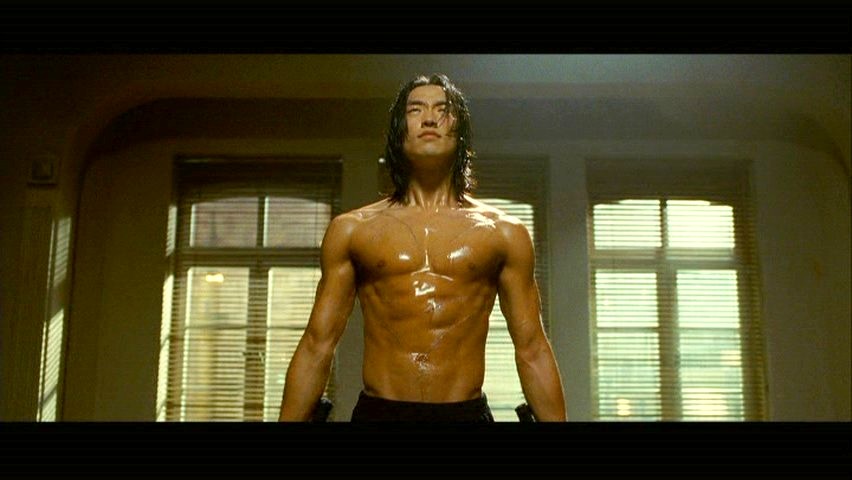
The warrior build is a lean, defined, proportionate look packed with strength and versatility.
Bruce Lee, Rain (ninja assassin) and Brad Pitt’s Tyler Durden character from Fight Club all reflect the warrior build to some degree.
The simplest, most effective means of building this physique is through progressively getting stronger whilst remaining lean and trim.
For many, that means stripping of body fat whilst preserving/building lean muscle tissue, through the combination of diet and heavy, progressive strength training. (It doesn’t get any simpler than that fellas).
Focus on boosting your strength and power to weight ratio. Every single pound on your body should have a reason to be there.
Breaking down the warrior physique
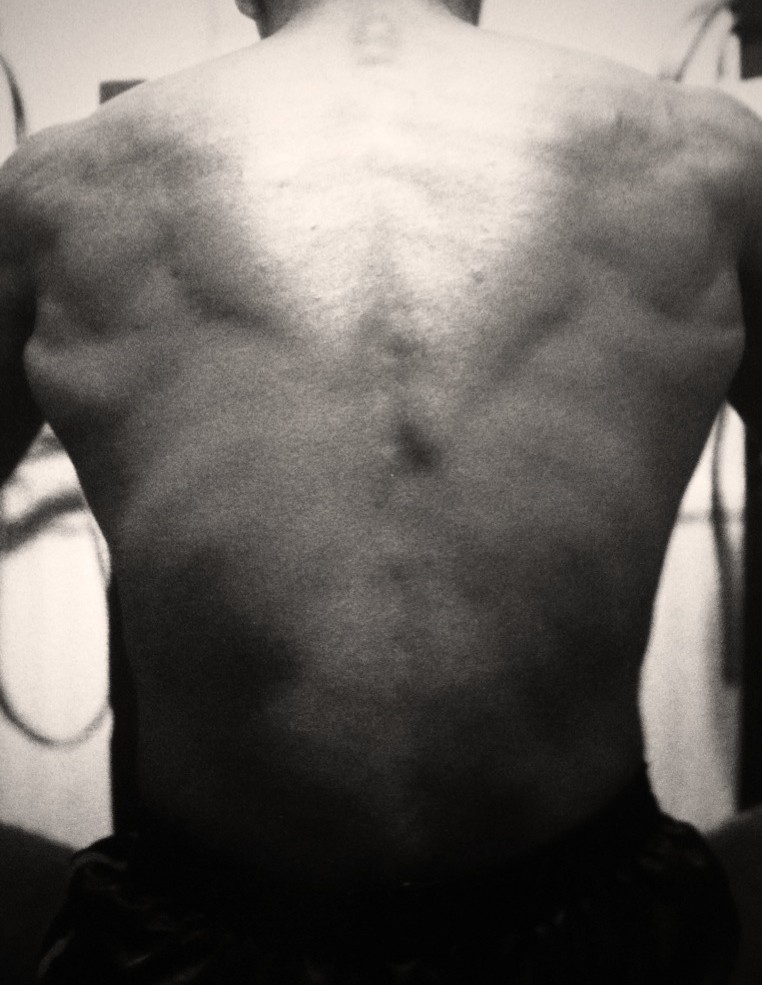
The Warrior physique is a lean, dense and proportionate build that prioritises strength and density over “puffy mass.” Every pound on your body has to earn its place, and pay rent in a manner of speaking.
The warrior build prioritises compact, solid, hard muscle, with incredible levels of leanness and definition.
The actual size of the muscles themselves may not be that impressive by bodybuilding standards, but they’ll be hard, cut and dense. The muscles will look like they’re literally carved from marble.
It’s the combination of a very low body fat and heavy strength training that produces this result.
An average amount of muscle mass, with exceptional definition brings about a much more impressive look, than a puffy, swollen, bloated looking physique.
Besides, training for dense muscle will have a lasting effect. Your muscle will look hard virtually all the time. Whereas, simply relying on higher rep, pump and fatigue training will only boost sarcoplasm (fluid) within the muscles, leading to a temporary swelling of the muscles.
This ultimately makes the muscles look bigger, but unfortunately it doesn’t last.
Anyway, moving on. Lets get to the meat and potatoes of this post.
The Essentials: The main movements of the “Warrior Routine”
- Weighted Chin-ups/pull-ups
- Weighted Dips
- Barbell Curls
- Incline Bench press
- Overhead Press
These are the exercises that will make up the bread and butter of your routine. Give them your undivided attention.
Pour your sweat and guts into them and you’ll carve out an impressively lean, dense and proportionate physique.
Increasing strength on these exercises alone will carry over and yield incredible results in terms of helping build and maintain an impressive physique.
Note: If you already have reasonably large thighs, you can drop or reduce emphasis on moves like squats and deadlifts.
Additional exercises/ contributing lifts
These are movements that complement the main lifts. They round out the routine and help fully develop the physique.
Chest: Incline Dumbbell Press
Deltoids (Shoulders): Lateral Raises and Face Pulls or Bent Over Flyes.
Back: Bent Over Rows
Legs: Squats, Deadlifts and Standing Calf Raises
Biceps: Seated Incline Hammer curls
Abs: Hanging Leg Raises and Planks.
Workout Overview
The overall volume and frequency is low. You’ll perform three workouts a week, each comprised of no more than 5 exercises per session.
Your primary objective is to improve strength on the on the main movements, which incidentally happen to be the one’s with (RPT) next to them.
Why low volume?
As mentioned earlier, higher volume, pump style training is not conductive to long term strength and dense muscle gains. (It’s worth repeating).
Put it this way, if you perform extensive volume and exercises per workout, you’ll end up stalling your strength gains and even regress.
It’s pretty well established that to make continual progress in the muscle gains department you need to get stronger over time.
Doing too many exercises will sap your strength during training and subsequently you’ll find your energy, focus and ability to lift heavy will waiver with the latter exercises. (Also increasing the likelihood of sustaining an injury as fatigue takes it’s toll).
Well that’s enough chatter. I’ve kept you waiting long enough. So hear it is folks….
The Warrior Routine
Note: Perform 2 warm up sets on first exercise of each muscle group. On RPT sets rest 2-3 minutes between sets to allow for optimal strength gains.
Workout A : Chest / Triceps / Deltoids
Incline Bench Press 3 x 5,8,10 (RPT)
Incline DB Press 2 x 6-8
Overhead Press 3 x 5,8,10 (RPT)
Lateral Raises 3 x 5-8
Dips 2 x 5-8
Notes on this workout: I like to emphasize heavy lateral raises. Most people perform them in the 8-12 rep range. I find that going slightly lower, working with 5/6 reps helps build density and caps the delts off nicely. Play around with it and see what works for you.
Workout B : Back / Biceps / Rear Deltoids
Weighted Chins/Pull-ups 3 x 5,8,10 (RPT)
Barbell Rows 3 x 5-8
Barbell Curls 3 x 5,8,10 (RPT)
Face Pulls w/rope attachment or Bent Over Flyes 3 x 8-12
Seated Incline Hammer Curls 3 x 8-12
Workout C: Legs / Abs (Optional)
Squats 3 x 5
Sumo Deadlifts 3 x 5
Standing Calf raises 3 x 4,6,12 (RPT)
Hanging leg raises 4 x 8-12
Plank hold 3 x 90 secs
Notes on this workout: You’ll notice I use RPT on calf raises. I’ve found that getting stronger in the 4-6 rep range with calves tends to yield better overall development. Calves are one of those areas that are stubborn as hell when it comes to growing. Be prepared to work them hard.
Means of progression
The aim of the game is to make some form of progress from workout to workout. Each training session you should be lifting heavier weight on the main lifts than your previous session.
I always aim to add anywhere from 2.5 – 5lbs to the bar each session. Constant progress, no matter how small is still progress and it adds up in the long run.
At the end of a 4-week period you could add 15- 20lbs to your lifts. (Damn fine progress). If you track your poundage, you’ll be able to see the progress you’re making and that’ll only help keep you motivated. (It’s a thing of Beauty).
What and why RPT?
If you’ve been lifting for a while, you probably have already come across RPT. This style of training has been increasing in popularity. Especially in strength circles.
RPT stands for Reverse Pyramid Training. It’s simply a way of training that involves beginning your session with your heaviest set first, while you’re fresh and full of energy.
Regular pyramid training involves building up to and ending with your heaviest set. With RPT you reverse the order.
The biggest benefit of training in this way is, that by starting with your heaviest set first (minus 1-2 warm up sets), you’ll find you’re stronger and lifting heavy won’t be as much of a struggle as it would if you were to lift heavy later on, as you become fatigued.
How long should I stick to this routine?
Thought you’d never ask.
I usually find it best to stick with a program for at least 8-12 weeks. Forget all that “muscle confusion” bullshit. Your body needs a chance to actually get used to the movements and improve at them before you switch up and do something else.
If you constantly program hop in search of “the next best thing”, you’ll never get the full benefits from the routine.
My thinking when it comes to training is to “milk” all the benefits and results that a program has to offer me. When progress comes to a halt, I’ll switch things up.
The problem is people change programs and exercises way too soon.
What about Cardio?
As leanness is a prerequisite for the warrior physique, most people will find they need cardio to help them reach and maintain a low body fat percentage. For cardio I usually go for walks with my dog on a daily basis, which covers low intensity cardio
On rest days or days when I’m not hitting the iron I’ll hit some sprints for a little high intensity cardio and to keep my anaerobic system in good condition. (Never know when you’ll have to out run an army of zombies).
You can play sports, hike, swim etc. Do whatever the hell you like, as long as it’s something you enjoy and doesn’t interfere with your strength training.
You don’t need to go cardio crazy. Just 15-20 mins of high intensity work 1-2 times a week on rest days will suffice. For low intensity cardio 30-45mins is fine.
To sum up:
- Hit the iron 3 days a week
- Focus on progressive overload on main moves
- Do some cardio and abs on rest days
- Be patient and enjoy the process.
In part two we’ll delve into eating for the warrior physique. Don’t miss out. Subscribe now.
If you liked the article and found it informative and want a fully structured program and nutrition guide that breaks everything down and goes into more detail when it comes to building the warrior physique, head over and grab a copy of WARRIOR 101.
]]>