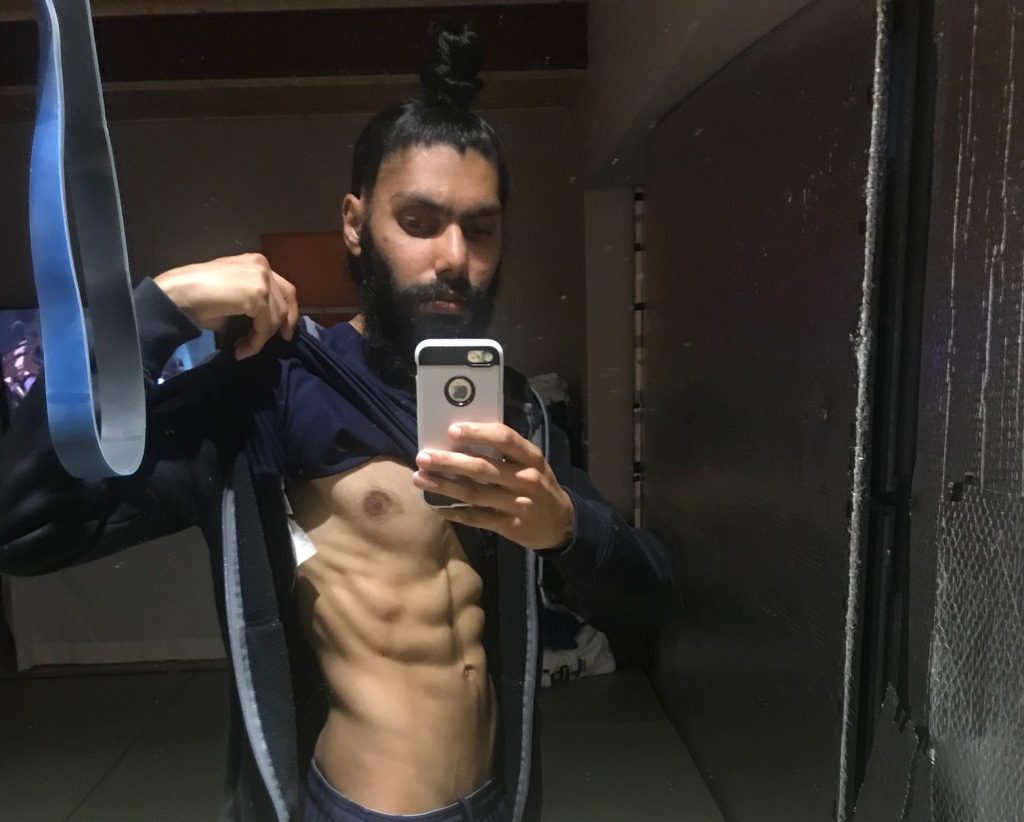
NOTE: THIS ARTICLE IS AN OVERVIEW ONLY. IN DEPTH CONCEPTS WILL NOT BE DISCUSSED TO LENGTHY DEGREE! (Coaching opportunities coming soon).
Right folks, let’s skip the pleasantries and get right down to brass tax.
YOU WANT… NO DEMAND RESULTS from your training efforts.
After all, you don’t go to work and expect NOT to get paid. (Unless you voluntarily work on the basis of charity).
SO WHY IN THE HOLLY HELL, would you invest all this time and energy in the gym and “not get paid” for your labor?
Why are you not getting the results & desired outcome?
Put simply, there’s 3 key factors that dictate to results of lack thereof.
- Training
- Nutrition
- Recovery
If any of these pieces of the puzzle are out of whack/alignment then kiss your dream bod/ fitness goals goodbye.
Lets break down and dissect these three pillars and figure out exactly why you’re not seeing the progress you’d like and surely deserve.
Now we’re going to approach each scenario from two different ends of the spectrum.
Scenario A: “THE SKINNY BOY SOLUTION”
Scenario B: “THE FAT GUY FORMULA”
Note: For the purposes of this post we’ll focus completely on the first scenario and make it all about the “Skinny Boy.”
Let me preface this by saying,
When referring to “Skinny Boy’s” I’m literally talking about individuals that are essentially slim, frail looking with no muscle tone or definition whatsoever.
Don’t get it twisted… “Wiry but lean & ripped” (which I consider the warrior build) isn’t what we’re addressing. You still need some muscle and definition to achieve that look… No, no, no
We’re talking about a complete “bag of bones” here. No muscle tone & no fat mass.
Anyways, I’ve dragged on long enough.
So without further ado, I present to you…
“THE SKINNY BOY SOLUTION”
Training
Skinny, under muscled and lacking in strength. The quote “98lb weakling .”
People in this category need to emphasize heavy, big, basic compound exercises and really focus on getting as strong as they possibly can. I need to drill this point home.
“The sole purpose of your training should be dedicated to making your entire body as strong as possible.”
The key here is to build a solid foundational base of strength, which will lead to the growth and development of bigger muscles overtime.
I don’t care what anybody says, to a great degree a stronger muscle is a bigger muscle and vice versa.
Bottom line is, if you’re skinny and want to get muscular and strong, the workouts you perform need to be designed with the priority and sole intent to build you up in terms of strength.
I personally perform 3-5 heavy sets in the 5-8 rep range when focusing on explicitly on maximizing strength and muscle. (Which I might add is practically all the damn time).
If you’re a complete beginner, your aim should be to add a little more weight to the bar from session to session or at the very least try and add an addition rep to 1 or 2 of your sets.
Training like this will, build dense, thick, hard muscle. Sure, you may not get pumped up like a bodybuilder, but you will still look damn impressive, especially when you peel back any additional ounce of the fat and “reveal the steel” so to speak.
What’s more, from a performance standpoint, you’ll actually develop usable strength that you can incorporate into daily life. (It’s a win/win situation).
What about cardio?
Thought you’d never ask.
From a health perspective, everybody should do some cardio. (Got to keep the old ticker thumping). However, the issue with many skinny individuals is that performing too much cardio or aerobic activity takes energy (calories) away from what would otherwise go towards synthesizing (building) new muscle tissue.
Personally from experience as a small boned individual, eating enough food to grow is already a pain in the ass and challenging enough as is.
I still recommend doing about 20 mins cardio at a steady pace 2-3 times a week for skinny boys, to help recovery and for heart health. You can do it either first thing in the morning or after your weights session. (Just get it done).
Nutrition
Now onto the next reason skinny boys don’t see progress…. Their nutrition flat out sucks or falls short to some degree.
Without getting too technical, your body has a certain energy level requirement (calorie). If you fail to meet this requirement you will start losing weight. (Which we don’t want to do as skinny guys).
Therefore, it’s imperative and stands to reason that in order to put on muscular size (and not just weight/ slop/ fat mass) you need to eat more of the raw building materials that make up that lean tissue.
Keeping this in mind, there are two key nutrients that the human body absolutely requires. These are:
- Essential amino acids
- Essential fatty acids
If you don’t ingest these key nutrients on a consistent basis, your body will eventually breakdown and die. (Paints a pretty grim image, I know).
Protein is the key macronutrient here.
You need to emphasize protein. Protein and more specifically the amino acids that protein breaks down into is what actually builds and repairs muscle tissue.
I’d aim for 1-1.5g of protein per 1lb of bodyweight. So if you weigh 150lbs eat anywhere from 150-225g protein.
Next you need fats. Fats do more than just supply your body with energy. They’re also responsible for proper hormone and endocrine function. (We won’t get into the nitty gritties of this within this post).
I usually like to get at least a bare minimum of no less than 30% of all daily calories from fat (& that’s during a dieting or fat loss phase).
Depending on dietary preferences this may vary e.g. On a ketogenic (keto) diet a higher percentage of calories can come from fat, verses more traditional or carb based nutritional approaches.
So keeping with our hypothetical 150lb person… that’d translate to roughly a bare minimum of 45grams of fat.
I’m currently eating approx.. 180g of total fat per day at present.. (Keep in mind I am experimenting with my own personalized a low carb muscle and strength building nutrition approach).
Lastly carbs…
Carbs are like rocket fuel. Carbs don’t really build muscle per say, they’re “protein sparing” which is a fancy way of saying they allow the protein you eat to be used to actually do it’s job of repairing and building cells and tissues in the body.
So one could say carbs are “anti catabolic” instead of “anabolic”. (However, I digress, we’re delving too much into the technical nuances).
Don’t be fooled into thinking you need to consume monstrous quantities of carbs in order to build muscle.
You only need enough to replenish the glycogen (stored carbohydrates/sugar./glucose) in the muscles, any additional beyond that will just be stored as excess lard.
As I said earlier, you need a lot of protein (amino acids actually build the muscle) and fat, for hormonal function (again steroidal hormones, e.g. testosterone are made of cholesterol and fat) not to mention the fact that on a calorie per gram basis fat has 9 calories to 4 cals per gram found in protein and carbs.
I personally keep the carbs extremely low, especially since lately I’ve been experimenting with a low carb “muscle building/ bulking” diet, where fat is the primary energy or fuel source. (Will outline this in further detail in future).
It’s difficult to give an exact number on how many carbs an individual should take in without factoring in their training, lifestyle, and current nutrition/ dietary preference and response.
That said however, as a basic rule, assuming the person is following a standard diet (i.e not keto or low carb) carb intake could vary all the way from as close to zero, all the up to 2 or even 3g per lb of bodyweight.
Now that’s quite a wide range… but it truly does depend on the individual’s sensitivity to carbohydrates and how their body processes them.
So to sum up nutrition, you need to first hit enough protein, secondly get your essential fats for optimal hormonal function and lastly any leftover calories should be allocated to either carbs or additional fats for energy.
Remember, this is just a basic overview, many other factors also play a hand in determining dietary practices.
Keep in mind all these recommendations are merely guild lines and not concrete, set in stone principles that are made to fit all.
(There is also a hormonal aspect to food that will not be addressed in this post, for time sake, but will be discussed at a later date).
Recovery
Onto the final piece of the jigsaw and something that often gets overlooked or just plain neglected.
Ah, good old recovery… It’s like the friend you least like hanging out with, but when you need them, they’re always there.
“WITHOUT RECOVERY THERE IS NO GROWTH”
Tattoo this on your forehead, ingrain it in your brain. Do whatever, but just make sure you fully realize this statement. (Actually it’s fact).
Think of recovery in three stages:
Stage 1: While lifting in the gym, you “rip up”, “tear up” & “slash up” (you get the idea) the muscle fibers. Essentially the gym is the stimulus or spark that triggers the potential for growth to occur.
Stage 2: Next you exit the gym, eat, sleep and engage in “non gym related” activities. The muscle fibers you damaged in the gym then begin to repair and return to their original state.. This is recovery.
Stage 3: The final stage of recovery is actually what we’re really after… It’s called super-compensation, where the muscles grow a little bit bigger and a little bit stronger. This happens due to the fact that your body thinks to itself:
“What the hell is this idiot doing? If I have to lift this crazy ass weight again, I better be prepared and build a little more muscle and get a bit stronger so I can do it more easily the next time round.”
Problem is people don’t recover sufficiently in the first place. You need to train hard enough to stimulate growth in the gym, then get the hell out, back off and recover to actually grow.
The critical factors to optimized recovery are (in no particular order):
- Sleep– Aim for approx. 7-8hrs quality sleep a night
- Hydration – Drink adequate water.
- Nutrition – Refer to nutrition section above.
- Rest days – Take days out from the gym. AKA DON’T TRAIN BALLS OUT EVERY FRICKIN DAY.
- Active recovery – stretch daily, do yoga or cardio. Anything that promotes blood flow and flushes the lymphatic system and pushes wastes, toxins and metabolites out of the muscles.
- Epsom salt/ mineral baths – This is a nice luxury one. Once or twice a week treat yourself to a nice relaxing soak in a hot bath. This really helps relax the muscles and the calm the mind
So there you have it ladies and gents. 3 sure fire ways for skinny boys to make progress on their physical pursuit.
This list could go on and on, but these are just a condensed few recovery options to get you well on your way.
Next time, we’ll talk all about fat guys.. Subscribe if you want to stay in the loop.
Till we meet again.
DISCLAIMER: NONE OF THE INFORMATION PRESENTED IN THIS ARTICLE IS MEANT TO REPLACE MEDICAL ADVICE. SEEK THE GUIDANCE OF A DOCTOR BEFORE UNDERTAKING ANY FITNESS PROGRAM.
]]>
What do fractions and fitness have in common?
Answer: With fractions what you do to the top (numerator) you have to do to the bottom (Denominator). Similarly, with training the attention dedicated to the upper body should also be applied to the lower half, and what you do to your front you should do in equal measure to the back.
Thus today’s post will cover some key preventative measures to reduce the likelihood of sustaining a major training related injury. (To keep things sweet and simple this article will mainly focus on upper body injuries, commonly associated with the shoulders. Lower body issues will be elaborated upon more thoroughly in future).
1) Make structural integrity a training priority
Note: This step alone will increase the longevity of your training years and if implemented early will save you a great deal of pain down the road.
When it comes to training the vast majority of typical bodybuilding and strength-training routines overlook (or worse, downright ignore) the critical importance of maintaining structural integrity and harmony between muscle groups throughout the body.
What is structural integrity?
Simply put, it’s the strength balance between the anterior (front chain) and posterior (back chain) muscles.
To avoid needles injuries, muscle imbalances and problems with posture, it’s imperative that there isn’t a significant variance in strength level between the muscle groups of the front and the back.
Muscle imbalances are incredibly common among seasoned lifters and gym rats alike, often the result of too much chest and arm (front work) focus and not enough back, rear delts and rotator cuff attention.
Over time, this unbalanced, one sided training approach will inevitably lead to an imbalance and is the big reason why many shoulder injuries, rotator cuff tears and strains are so prevalent amongst lifters.
What winds up happening is the chest and front delts end up becoming significantly stronger than the muscles of the back and in effect overpower them. This creates a muscle imbalance, and is the primary reason that the hunched shoulder look is prevalent.
Overtime due to lack of stimulation the muscles of the rear delts and rotator cuff weaken further and SLAP, BANG… Injuries, in the form of a rotator cuff tear or shoulder impingement etc.
On the contrary, don’t think this is merely relegated to those of us who regularly engage in the practice of blessing iron. Oh no.
It pertains greatly to everybody, whether you train or not. Due to the fact that as human beings the vast majority of the activities we engage in happen directly in front of us. (Don’t get it? hold your horses and all will be revealed).
See, think about this, you look down at your phone, computers. You pick up your knife and fork to shove grub down the ole pie hole, pick up a book or magazine to read etc. You get the general idea. All these activities take place in front of your torso.
If you’re like the majority of people they’re usually looking down at their phones, laptops etc. for extended periods of time, ultimately resulting in posture issues (the dreaded hunched shoulders) down the road, and potential shoulder/rotator cuff injuries aforementioned earlier.
So how’d you avoid this unpleasantness?
How do you best avoid this scenario and greatly reduce the likelihood of experiencing such an injury? (definitely not fun).
Great questions, that brings us to point numero deux.
2) Include a posterior chain exercise in every workout
I’ve adopted the practice of making the first exercise of every upper body workout a pulling motion to effectively target the back, which as I’ve mentioned before is often neglected at least in comparison to the more favorable “show muscles” of the front.
I routinely begin each session with 2-3 sets of face-pulls as a preventative measure.
So, taking into consideration everything mentioned earlier in this post, the following simple exercise list will give you an idea of some of the counter measures you can take to combat “deltoid destruction” and “back blowout.”
Exercises to throw into your training mix:
- Face pulls
- Rear delt flyes w/ dumbells or on pec dec machine
- Pull up/chin up variations
- Any bent over rowing motion
- Deadlifts/ Back bridges/ hyper-extensions
Include the following pulling movements in your training to ensure you hit the muscles of the posterior chain. These’ll act as a counter balance to all the pressing/pushing motions and work you do to your front.
In my opinion, the pulling to pushing ratio of movements in your routine should be about 70/30. (Obviously favouring pulling motions).
Remember, you’ve got to compensate for the fact that you spend a lot of your day involved in tasks that take place at the front of your body, let alone the exercises you do to pump up your “show muscles.”
3) Understand the purpose of assistance movements in injury prevention
Though compound movements (bench press, pull ups, overhead press, squats etc) are great for stimulating overall muscle growth and strength development, they cannot engage all aspects of a muscle.
Relying solely on compound lifts will also lead to muscle imbalances as weaker muscle groups will give way to stronger ones when performing a certain lift.
That’s where assistance or isolation movements come into play. They’re great as a means of specifically targeting, stimulating and strengthening the weaker muscle groups.
I view the assistance exercises as not just a means of isolating certain parts of a given muscle, but also a way of ensuring you strengthen and engage weaker or less developed areas of your physique, thus maintaining a good strength ratio between the various muscle groups.
THERE YOU HAVE IT.
3 simple steps to maintain order, harmony and balance throughout your body and greatly reduce the instance of injury.
If you enjoyed this post, found the content useful and want more info like it, there’s 2 simple thing you can do effective immediately:
That’s all for now folks…. TTFN.
]]>
The warrior build is a lean, defined, proportionate look packed with strength and versatility.
Bruce Lee, Rain (ninja assassin) and Brad Pitt’s Tyler Durden character from Fight Club all reflect the warrior build to some degree.
The simplest, most effective means of building this physique is through progressively getting stronger whilst remaining lean and trim.
For many, that means stripping of body fat whilst preserving/building lean muscle tissue, through the combination of diet and heavy, progressive strength training. (It doesn’t get any simpler than that fellas).
Focus on boosting your strength and power to weight ratio. Every single pound on your body should have a reason to be there.
Breaking down the warrior physique
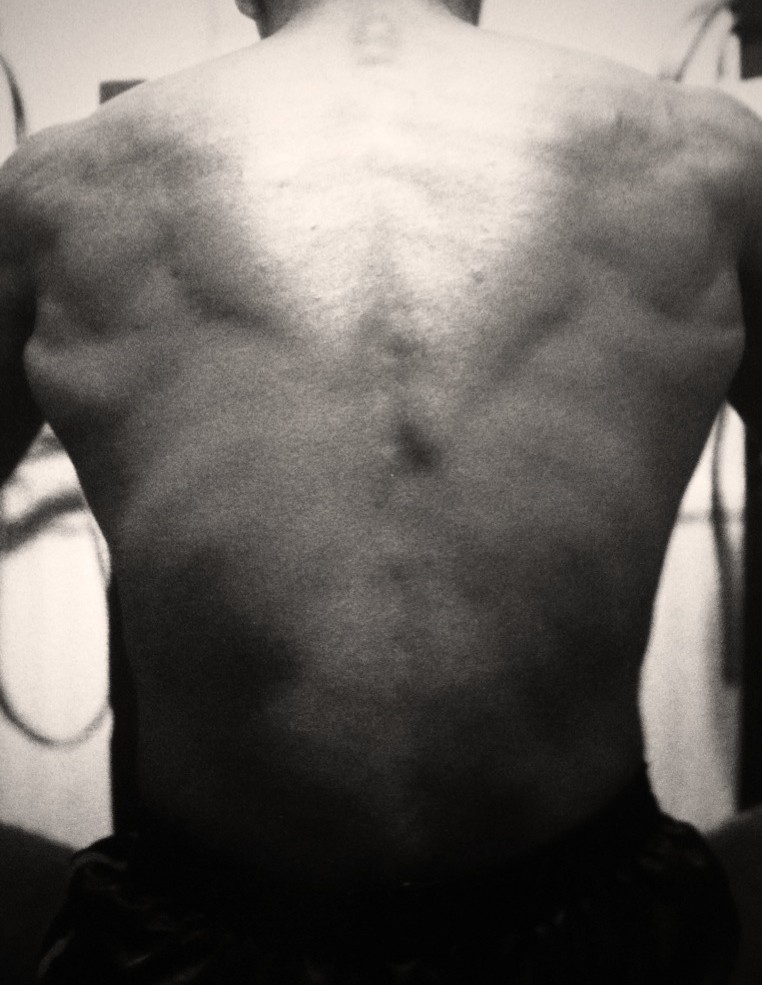
The Warrior physique is a lean, dense and proportionate build that prioritises strength and density over “puffy mass.” Every pound on your body has to earn its place, and pay rent in a manner of speaking.
The warrior build prioritises compact, solid, hard muscle, with incredible levels of leanness and definition.
The actual size of the muscles themselves may not be that impressive by bodybuilding standards, but they’ll be hard, cut and dense. The muscles will look like they’re literally carved from marble.
It’s the combination of a very low body fat and heavy strength training that produces this result.
An average amount of muscle mass, with exceptional definition brings about a much more impressive look, than a puffy, swollen, bloated looking physique.
Besides, training for dense muscle will have a lasting effect. Your muscle will look hard virtually all the time. Whereas, simply relying on higher rep, pump and fatigue training will only boost sarcoplasm (fluid) within the muscles, leading to a temporary swelling of the muscles.
This ultimately makes the muscles look bigger, but unfortunately it doesn’t last.
Anyway, moving on. Lets get to the meat and potatoes of this post.
The Essentials: The main movements of the “Warrior Routine”
- Weighted Chin-ups/pull-ups
- Weighted Dips
- Barbell Curls
- Incline Bench press
- Overhead Press
These are the exercises that will make up the bread and butter of your routine. Give them your undivided attention.
Pour your sweat and guts into them and you’ll carve out an impressively lean, dense and proportionate physique.
Increasing strength on these exercises alone will carry over and yield incredible results in terms of helping build and maintain an impressive physique.
Note: If you already have reasonably large thighs, you can drop or reduce emphasis on moves like squats and deadlifts.
Additional exercises/ contributing lifts
These are movements that complement the main lifts. They round out the routine and help fully develop the physique.
Chest: Incline Dumbbell Press
Deltoids (Shoulders): Lateral Raises and Face Pulls or Bent Over Flyes.
Back: Bent Over Rows
Legs: Squats, Deadlifts and Standing Calf Raises
Biceps: Seated Incline Hammer curls
Abs: Hanging Leg Raises and Planks.
Workout Overview
The overall volume and frequency is low. You’ll perform three workouts a week, each comprised of no more than 5 exercises per session.
Your primary objective is to improve strength on the on the main movements, which incidentally happen to be the one’s with (RPT) next to them.
Why low volume?
As mentioned earlier, higher volume, pump style training is not conductive to long term strength and dense muscle gains. (It’s worth repeating).
Put it this way, if you perform extensive volume and exercises per workout, you’ll end up stalling your strength gains and even regress.
It’s pretty well established that to make continual progress in the muscle gains department you need to get stronger over time.
Doing too many exercises will sap your strength during training and subsequently you’ll find your energy, focus and ability to lift heavy will waiver with the latter exercises. (Also increasing the likelihood of sustaining an injury as fatigue takes it’s toll).
Well that’s enough chatter. I’ve kept you waiting long enough. So hear it is folks….
The Warrior Routine
Note: Perform 2 warm up sets on first exercise of each muscle group. On RPT sets rest 2-3 minutes between sets to allow for optimal strength gains.
Workout A : Chest / Triceps / Deltoids
Incline Bench Press 3 x 5,8,10 (RPT)
Incline DB Press 2 x 6-8
Overhead Press 3 x 5,8,10 (RPT)
Lateral Raises 3 x 5-8
Dips 2 x 5-8
Notes on this workout: I like to emphasize heavy lateral raises. Most people perform them in the 8-12 rep range. I find that going slightly lower, working with 5/6 reps helps build density and caps the delts off nicely. Play around with it and see what works for you.
Workout B : Back / Biceps / Rear Deltoids
Weighted Chins/Pull-ups 3 x 5,8,10 (RPT)
Barbell Rows 3 x 5-8
Barbell Curls 3 x 5,8,10 (RPT)
Face Pulls w/rope attachment or Bent Over Flyes 3 x 8-12
Seated Incline Hammer Curls 3 x 8-12
Workout C: Legs / Abs (Optional)
Squats 3 x 5
Sumo Deadlifts 3 x 5
Standing Calf raises 3 x 4,6,12 (RPT)
Hanging leg raises 4 x 8-12
Plank hold 3 x 90 secs
Notes on this workout: You’ll notice I use RPT on calf raises. I’ve found that getting stronger in the 4-6 rep range with calves tends to yield better overall development. Calves are one of those areas that are stubborn as hell when it comes to growing. Be prepared to work them hard.
Means of progression
The aim of the game is to make some form of progress from workout to workout. Each training session you should be lifting heavier weight on the main lifts than your previous session.
I always aim to add anywhere from 2.5 – 5lbs to the bar each session. Constant progress, no matter how small is still progress and it adds up in the long run.
At the end of a 4-week period you could add 15- 20lbs to your lifts. (Damn fine progress). If you track your poundage, you’ll be able to see the progress you’re making and that’ll only help keep you motivated. (It’s a thing of Beauty).
What and why RPT?
If you’ve been lifting for a while, you probably have already come across RPT. This style of training has been increasing in popularity. Especially in strength circles.
RPT stands for Reverse Pyramid Training. It’s simply a way of training that involves beginning your session with your heaviest set first, while you’re fresh and full of energy.
Regular pyramid training involves building up to and ending with your heaviest set. With RPT you reverse the order.
The biggest benefit of training in this way is, that by starting with your heaviest set first (minus 1-2 warm up sets), you’ll find you’re stronger and lifting heavy won’t be as much of a struggle as it would if you were to lift heavy later on, as you become fatigued.
How long should I stick to this routine?
Thought you’d never ask.
I usually find it best to stick with a program for at least 8-12 weeks. Forget all that “muscle confusion” bullshit. Your body needs a chance to actually get used to the movements and improve at them before you switch up and do something else.
If you constantly program hop in search of “the next best thing”, you’ll never get the full benefits from the routine.
My thinking when it comes to training is to “milk” all the benefits and results that a program has to offer me. When progress comes to a halt, I’ll switch things up.
The problem is people change programs and exercises way too soon.
What about Cardio?
As leanness is a prerequisite for the warrior physique, most people will find they need cardio to help them reach and maintain a low body fat percentage. For cardio I usually go for walks with my dog on a daily basis, which covers low intensity cardio
On rest days or days when I’m not hitting the iron I’ll hit some sprints for a little high intensity cardio and to keep my anaerobic system in good condition. (Never know when you’ll have to out run an army of zombies).
You can play sports, hike, swim etc. Do whatever the hell you like, as long as it’s something you enjoy and doesn’t interfere with your strength training.
You don’t need to go cardio crazy. Just 15-20 mins of high intensity work 1-2 times a week on rest days will suffice. For low intensity cardio 30-45mins is fine.
To sum up:
- Hit the iron 3 days a week
- Focus on progressive overload on main moves
- Do some cardio and abs on rest days
- Be patient and enjoy the process.
In part two we’ll delve into eating for the warrior physique. Don’t miss out. Subscribe now.
If you liked the article and found it informative and want a fully structured program and nutrition guide that breaks everything down and goes into more detail when it comes to building the warrior physique, head over and grab a copy of WARRIOR 101.
]]>